What Is the Keto Diet? A Beginner's Guide to Understanding Ketogenic Eating
Learn what the ketogenic diet is, how ketosis works, which foods are included, and what beginners should know before considering a keto eating pattern.

The ketogenic diet, commonly known as the keto diet, is an eating pattern that focuses on reducing carbohydrate intake and increasing the proportion of fats in the diet. It has attracted attention for its distinctive approach to nutrition and the way it changes how the body uses energy.
But what exactly is a keto diet? How does it work, and what should beginners understand before exploring it?
This guide explains the fundamentals of ketogenic eating in straightforward terms.
What Is a Ketogenic Diet?
A ketogenic diet is a low-carbohydrate, high-fat eating pattern designed to encourage the body to enter a metabolic state called ketosis [1].
Under typical dietary conditions, the body primarily uses glucose, which comes from carbohydrates, as its main energy source [2].
When carbohydrate availability becomes sufficiently limited, the body can increase its production of ketones from fat. These ketones can then serve as an alternative energy source [2].
This metabolic process is known as ketosis.
A ketogenic diet generally includes foods such as:
- Eggs
- Fish and seafood
- Meat and poultry
- Avocados
- Olive oil
- Nuts and seeds
- Low-carbohydrate vegetables
Foods commonly limited include bread, rice, pasta, sugary drinks, sweets and many other carbohydrate-rich foods.
How Does Ketosis Work?
To understand keto, it helps to understand how the body manages energy.
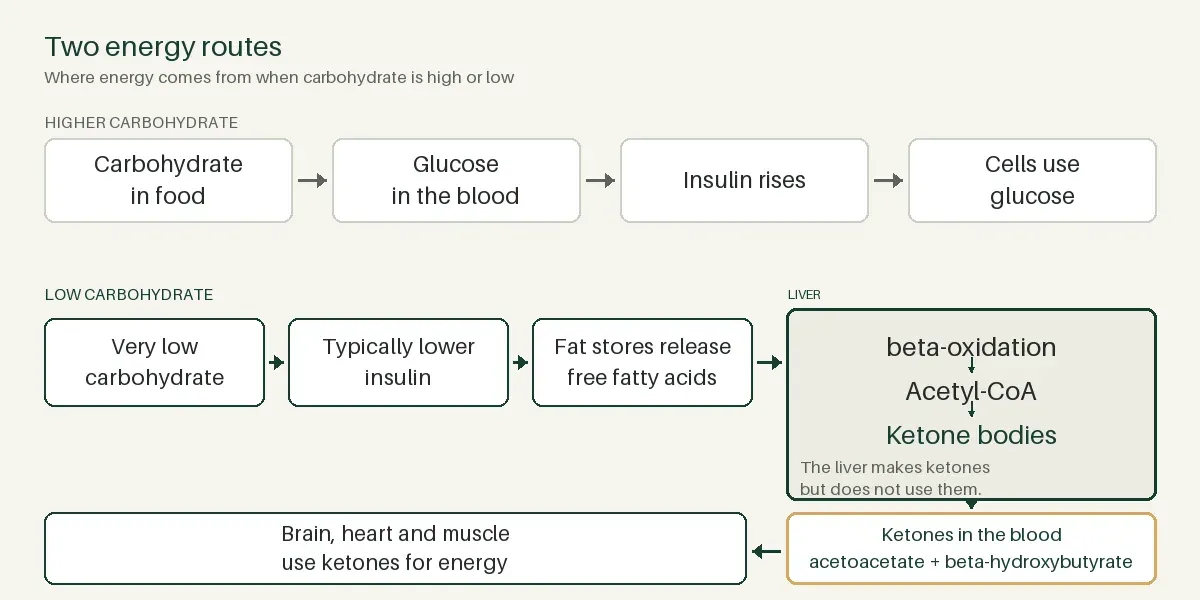
Simplified view. Ketones are built in the liver from acetyl-CoA produced by fatty-acid oxidation, then released for other tissues.
1. Glucose as an Energy Source
Carbohydrates are broken down into glucose during digestion. Glucose enters the bloodstream and can be used by cells for energy.
The body also stores some glucose in the form of glycogen, mainly in the liver and muscles.
2. Reduced Carbohydrate Availability
When carbohydrate intake is substantially reduced, the body’s available glucose supply and glycogen stores change.
The body responds through several metabolic adjustments, including increased fat breakdown.
3. Ketone Production
The liver converts some fatty acids into molecules called ketone bodies [2].
These include:
- Beta-hydroxybutyrate
- Acetoacetate
- Acetone
Ketones can be used by several tissues as an alternative energy source.
This is the central metabolic feature of nutritional ketosis.
What Foods Can You Eat on a Keto Diet?
Food selection is an important part of ketogenic eating.
Rather than focusing only on what to avoid, it is useful to understand the variety of foods that can contribute to a balanced eating pattern.
Commonly Included Foods
Protein-rich foods
- Eggs
- Chicken
- Fish
- Beef
- Seafood
Sources of dietary fat
- Extra virgin olive oil
- Avocados
- Nuts
- Seeds
Lower-carbohydrate vegetables
- Spinach
- Broccoli
- Cauliflower
- Cucumber
- Lettuce
- Zucchini
Dairy products
- Cheese
- Plain Greek yoghurt
- Unsweetened dairy options, depending on carbohydrate content
Foods Commonly Limited
- Sugar and sweetened beverages
- White bread
- Rice
- Pasta
- Cakes and pastries
- Many breakfast cereals
- High-carbohydrate snack foods
The carbohydrate content of individual foods can vary, so checking nutrition labels can be useful. Our practical food list shows which foods fit and how labels differ between countries. The three carbohydrate numbers on a label explain why the same food can look different in different countries.
Is the Keto Diet Suitable for Everyone?
No. A ketogenic diet is not automatically suitable for every person. If you are weighing it up, our guide to deciding whether keto is right for you sets out the trade-offs honestly.
Changing carbohydrate intake significantly can affect blood glucose regulation, medication requirements and other aspects of health [3].
People with diabetes, kidney or liver conditions, a history of eating disorders, or those taking medication that affects blood glucose should seek advice from a qualified healthcare professional before considering a ketogenic diet [3].
Pregnant or breastfeeding individuals should also obtain professional guidance before making significant dietary changes.
A restrictive eating pattern may not be appropriate for everyone, and there are other ways to build a nutritious diet.
Potential Benefits and Considerations
Research into ketogenic diets has explored several areas, including their use in specific medical settings and their effects on metabolic health.
However, it is important to distinguish between established clinical applications and broader claims made in popular diet discussions.
Some considerations include:
- Food planning: A restrictive carbohydrate intake requires attention to food variety and nutrient intake.
- Dietary fibre: Limiting certain carbohydrate-rich foods may reduce fibre intake if vegetables, nuts and seeds are not included appropriately [4].
- Long-term sustainability: Some people find restrictive eating patterns difficult to maintain.
- Individual differences: Responses to dietary changes vary from person to person.
The ketogenic diet also has an established medical application in the management of certain forms of drug-resistant epilepsy, under specialist supervision [5].
This does not mean that keto is a universal treatment for other medical conditions.
Keto Is More Than Just Cutting Carbohydrates
A common misunderstanding is that ketogenic eating simply means avoiding carbohydrates and eating as much fat as possible.
In reality, food quality and nutritional balance still matter.
A thoughtful approach considers the overall composition of meals, including protein, dietary fibre, micronutrients and the types of fats consumed.
For example, choosing olive oil, nuts, seeds, fish and avocados provides a different nutritional profile from relying heavily on highly processed foods.
Understanding these distinctions is important when evaluating any dietary pattern. It also does not require specialist products: low-carb eating on a budget covers cheaper ways to build meals.
Frequently Asked Questions
Is keto the same as a low-carb diet?
Not exactly. All ketogenic diets are low in carbohydrates, but not all low-carbohydrate diets are designed to produce ketosis.
Does the body need carbohydrates?
The body can produce glucose through metabolic processes such as gluconeogenesis [6]. However, carbohydrate-containing foods can provide valuable fibre, vitamins, minerals and other beneficial nutrients.
How long does it take to enter ketosis?
The timing varies depending on factors such as carbohydrate intake, activity levels, metabolism and individual physiology. There is no universal timeline.
Can you eat vegetables on keto?
Yes. Many non-starchy vegetables, including spinach, broccoli, cauliflower and lettuce, can fit into a ketogenic eating pattern.
Final Thoughts
The ketogenic diet is a distinctive eating pattern built around reducing carbohydrate intake and encouraging the production of ketones as an alternative energy source.
Understanding ketosis, food choices, nutritional considerations and individual health circumstances provides a much stronger foundation than following popular diet trends.
As with any significant dietary change, informed decisions should take priority over quick promises or exaggerated claims.
At The Keto Ledger, our goal is simple: to make nutrition information easier to understand, separate evidence from speculation and help readers make better-informed choices.
Evidence. Food. Better Choices.
References
- Harvard T.H. Chan School of Public Health, The Nutrition Source. Diet Review: Ketogenic Diet for Weight Loss. https://nutritionsource.hsph.harvard.edu/healthy-weight/diet-reviews/ketogenic-diet/ — published March 27, 2018; updated September 5, 2025.
- National Center for Biotechnology Information, Bookshelf (StatPearls). Biochemistry, Ketogenesis. https://www.ncbi.nlm.nih.gov/books/NBK493179/ — no publication date displayed; accessed November 20, 2026.
- Diabetes UK. Low-carb diet and meal plan. https://www.diabetes.org.uk/living-with-diabetes/eating/meal-plans/low-carb — no publication date displayed; accessed November 20, 2026.
- NHS. How to get more fibre into your diet. https://www.nhs.uk/live-well/eat-well/digestive-health/how-to-get-more-fibre-into-your-diet/ — updated March 3, 2026.
- Epilepsy Society. Ketogenic diets. https://epilepsysociety.org.uk/ketogenic-diet — no publication date displayed; accessed November 20, 2026.
- National Center for Biotechnology Information, Bookshelf (StatPearls). Physiology, Gluconeogenesis. https://www.ncbi.nlm.nih.gov/books/NBK541119/ — no publication date displayed; accessed November 20, 2026.
Thank you for reading The Keto Ledger.
Explore more articles →