Keto on a Budget: Eating Low-Carb Without Overspending
How to eat low-carb without overspending: cheaper proteins, smarter planning, and why keto-branded products are rarely the budget option.
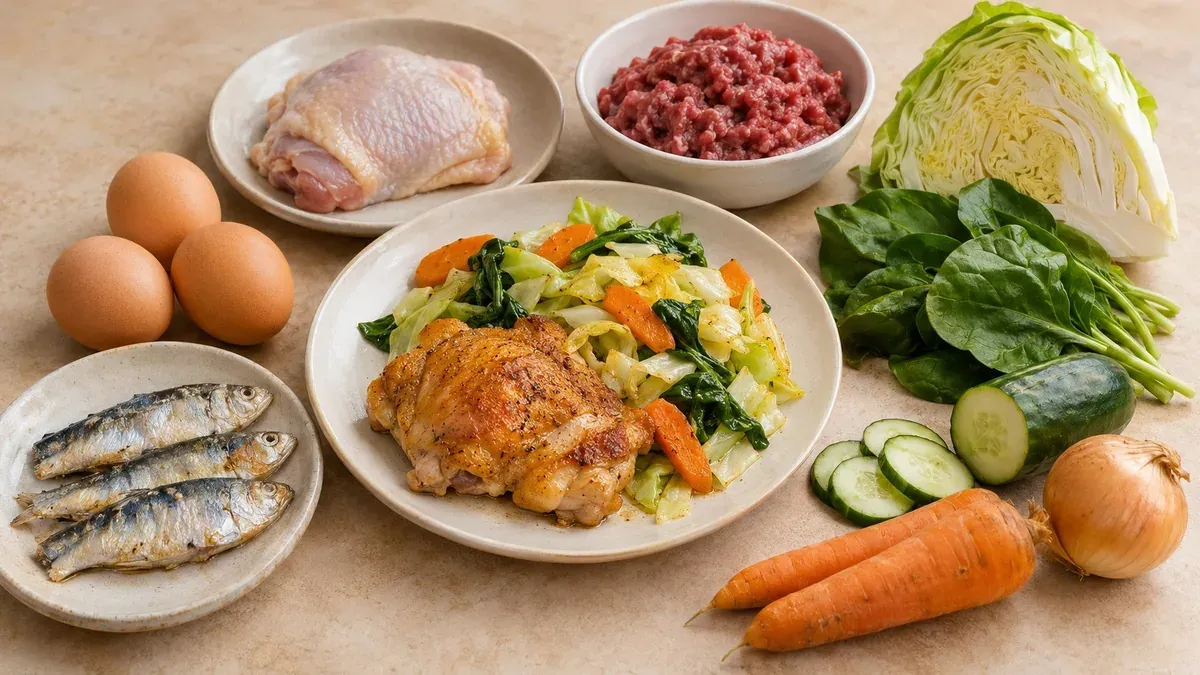
Keto has a reputation for being expensive. Walk down the “health” aisle and you will find keto bars, keto bread, keto shakes and bottles of MCT oil, all priced like premium products.
You do not need any of them. The foods that make up most of a low-carbohydrate diet are ordinary supermarket items, and many are among the cheapest things on the shelf.
Cheap Foods That Fit
The basics of keto are protein, vegetables, eggs, cheese and fats — not branded products. Our practical food list covers the full range.
- Eggs — often one of the cheapest protein sources, though prices vary by market.
- Chicken thighs and drumsticks — cheaper than breast and harder to overcook.
- Canned fish — tuna, sardines and mackerel keep for months and cost little.
- Frozen vegetables — broccoli, spinach and cauliflower, with no waste.
- Cabbage, courgette and mushrooms — low-carb, filling, and rarely expensive.
- Block cheese and plain yogurt — cheaper than sliced or flavoured versions.
- Butter and cooking oil — bought plain, not in a “keto” bottle.
Nuts are nutritious but pricey; buy them plain and unsalted, use them as a topping rather than a snack bowl.
Plan Before You Shop
The biggest savings come from planning, not from coupons.
Make a rough plan for the week’s main meals, check what you already have, and write a list before you go [1]. Shop when you are not rushed or hungry, and compare the price per 100 g rather than the price per pack. Cooking once and eating twice — a tray of chicken thighs, a pot of mince — cuts both cost and effort.
Frozen and canned vegetables are just as nutritious as fresh and often cheaper [2]. Buying seasonally helps too.
Skip the “Keto” Label
Products marketed as keto are a marketing category, not a nutritional requirement. Some cost far more than the ordinary ingredients they replace, and some contain sugar alcohols that upset sensitive stomachs.
When the main selling point is the word “keto” on the box, compare the price per 100 g with the plain equivalent before deciding it saves you money.
Two Things to Keep in Mind
First, low-carbohydrate eating still needs vegetables. Fiber is easy to under-do when grains and fruit are limited, and UK guidance suggests around 30 g a day [5].
Second, keto is not the only way to eat well, and it is not necessary for most people. A pattern built on vegetables, beans, fish and olive oil can be affordable too — beans and lentils are generally cheaper than meat and fish [2]. Government guidance is clear that some people should not attempt a ketogenic diet without medical advice [3], and reviews of the evidence note that long-term data remain limited [4].
The right question is not “which diet is cheapest to follow perfectly?” It is “which healthy way of eating can I afford, enjoy and keep up?” For some people that is keto. For others it is not, and that is fine.
References
- British Dietetic Association. Eat well, spend less. https://www.bda.uk.com/resource/food-facts-eat-well-spend-less.html — no publication date shown; accessed November 19, 2026.
- Harvard T.H. Chan School of Public Health, The Nutrition Source. Strategies for Eating Well on a Budget. https://nutritionsource.hsph.harvard.edu/strategies-nutrition-budget/ — published May 22, 2020; updated November 25, 2024.
- healthdirect (Australian Government Department of Health and Aged Care). Ketogenic diet. https://www.healthdirect.gov.au/healthy-living/food-and-nutrition/ketogenic-diet — updated February 5, 2026.
- Harvard T.H. Chan School of Public Health, The Nutrition Source. Diet Review: Ketogenic Diet for Weight Loss. https://nutritionsource.hsph.harvard.edu/healthy-weight/diet-reviews/ketogenic-diet/ — published March 27, 2018; updated September 5, 2025.
- NHS. How to get more fibre into your diet. https://www.nhs.uk/live-well/eat-well/digestive-health/how-to-get-more-fibre-into-your-diet/ — updated March 3, 2026.
Thank you for reading The Keto Ledger.
Explore more articles →